Lesson One
Where enquiries
go missing
Before you fix follow-up, you need to know where enquiries are coming from and what happens next.
Watch Lesson One first, then use this page to map your own enquiry route.
Lesson One
“Somewhere” is not a system
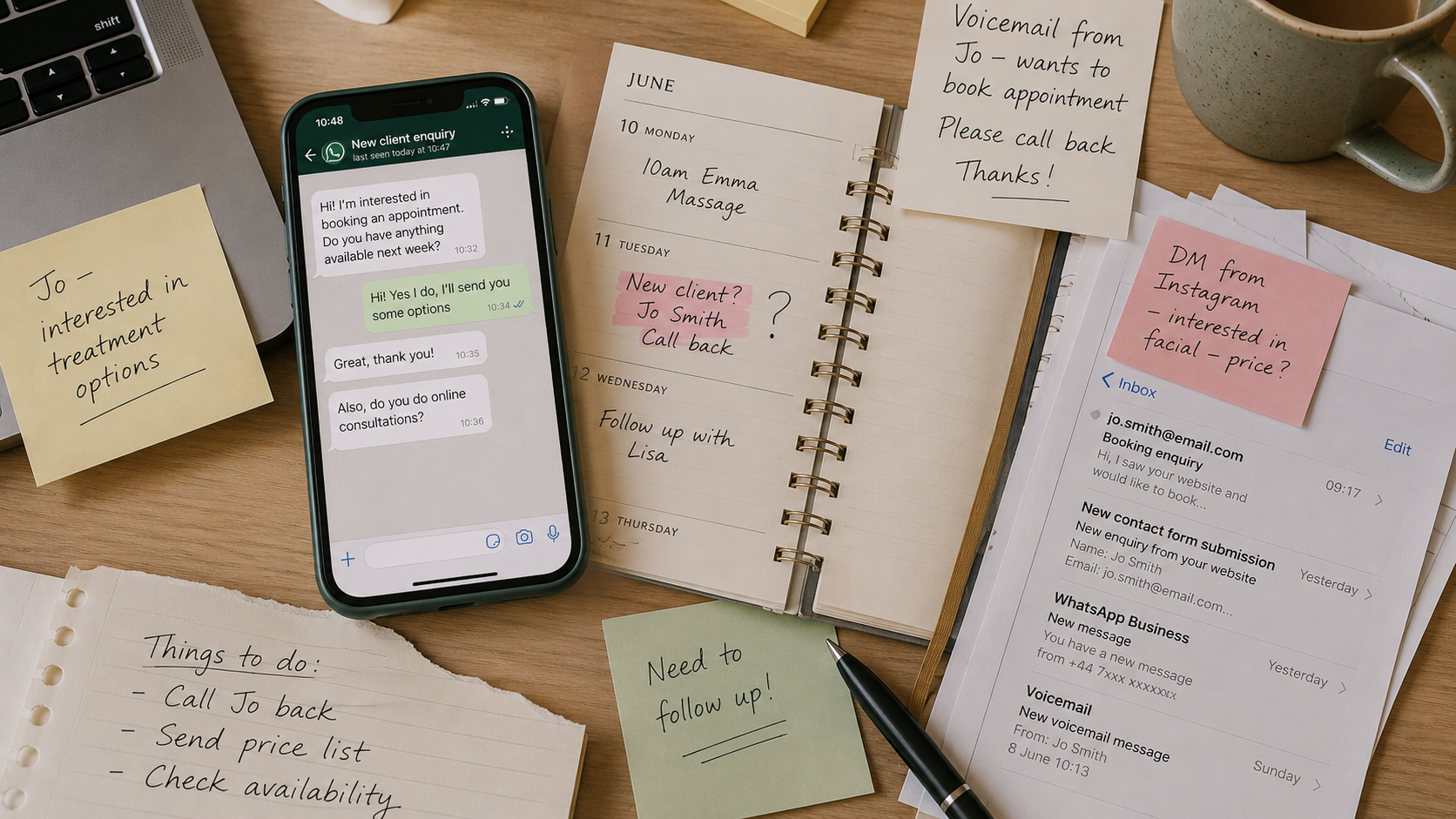
If someone asked where the enquiry from last Tuesday afternoon was, could you answer straight away?
For many practices, the honest answer is: somewhere.
- An inbox
- A WhatsApp message
- A notebook
- A voicemail
- A diary note
- Or just in your head
That feels normal until one enquiry gets missed.
And it is not usually dramatic. No big disaster. No angry client. Just someone who asked, waited, and booked with somebody else.
The problem is not that you do not care.
The problem is that enquiries can arrive in too many places, and follow-up depends on you remembering.
Lesson One
One front door, not five
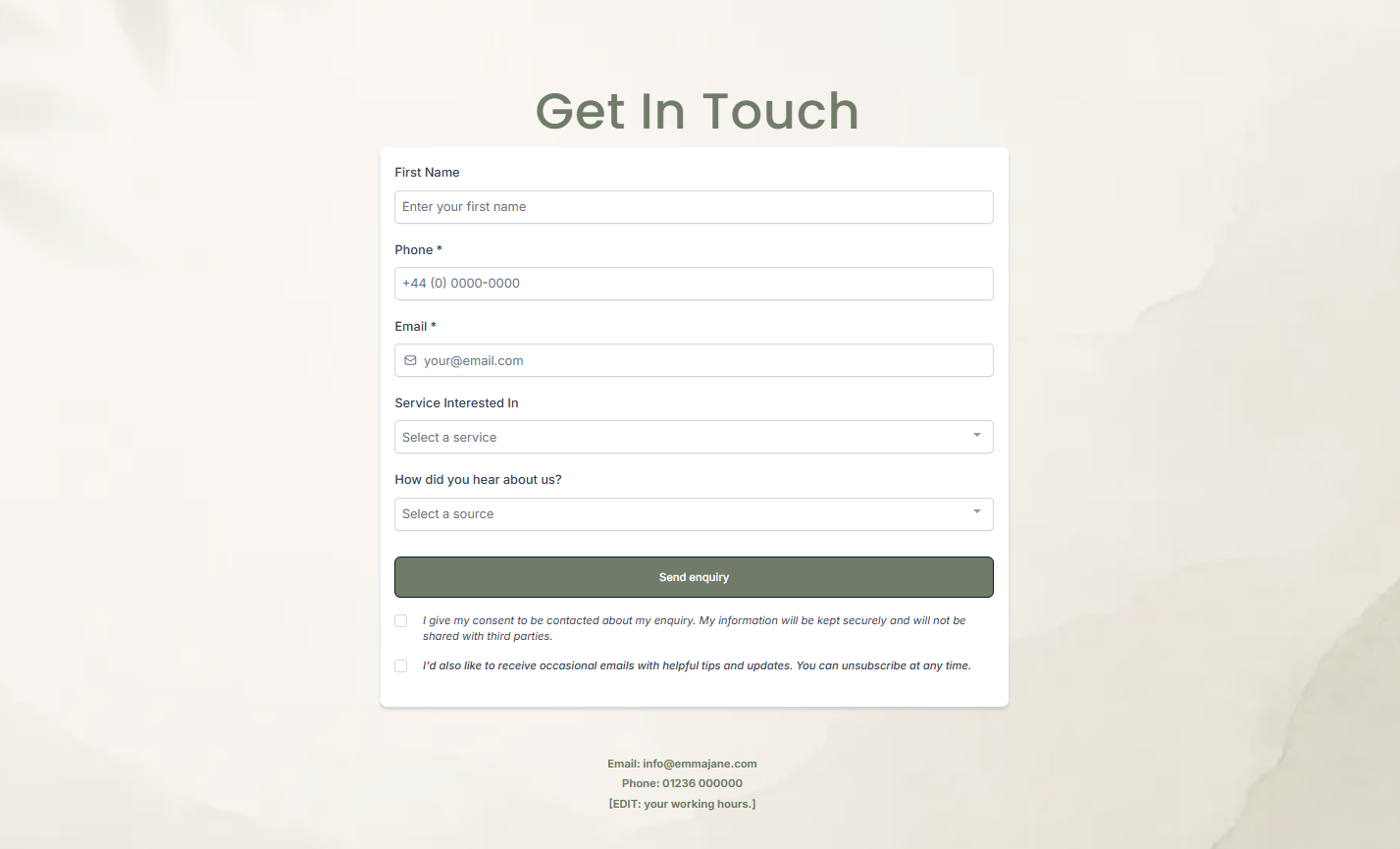
In the walkthrough, Hannah Banana comes through one enquiry form. That form becomes the front door for the practice.
It can be linked from your website, Google profile, email footer, social bios, messages and referral replies. But the enquiry still lands in one place.
That is the point. Not five doors. One.
Simple flow
- Website, Google profile, social bio, email footer
- One enquiry form
- One contact record
- One pipeline
The fewer places an enquiry can hide, the easier it is to reply quickly and track what happened.
Lesson One
The form should collect more than a message
The enquiry form is not just there to capture a name and email. It should collect the details you need to make the next step easier.
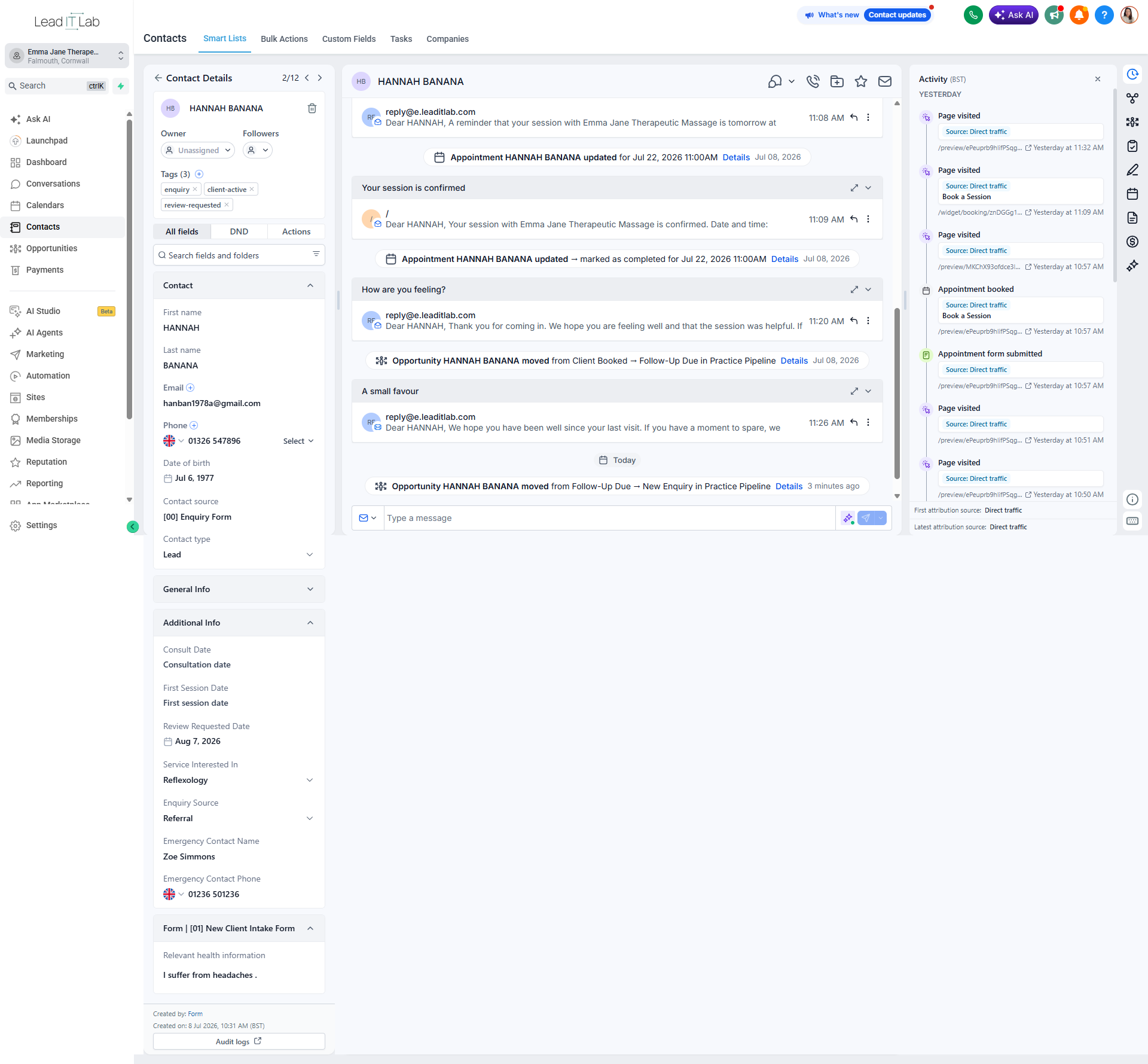
In the walkthrough, Hannah Banana chooses reflexology and says she was referred by a friend. That matters because the information can sit on her contact record.
You can see what she is interested in, how she found you, whether she gave consent, and what needs to happen next.
What do you currently ask for when someone enquires?
Consent to contact:
Lesson One
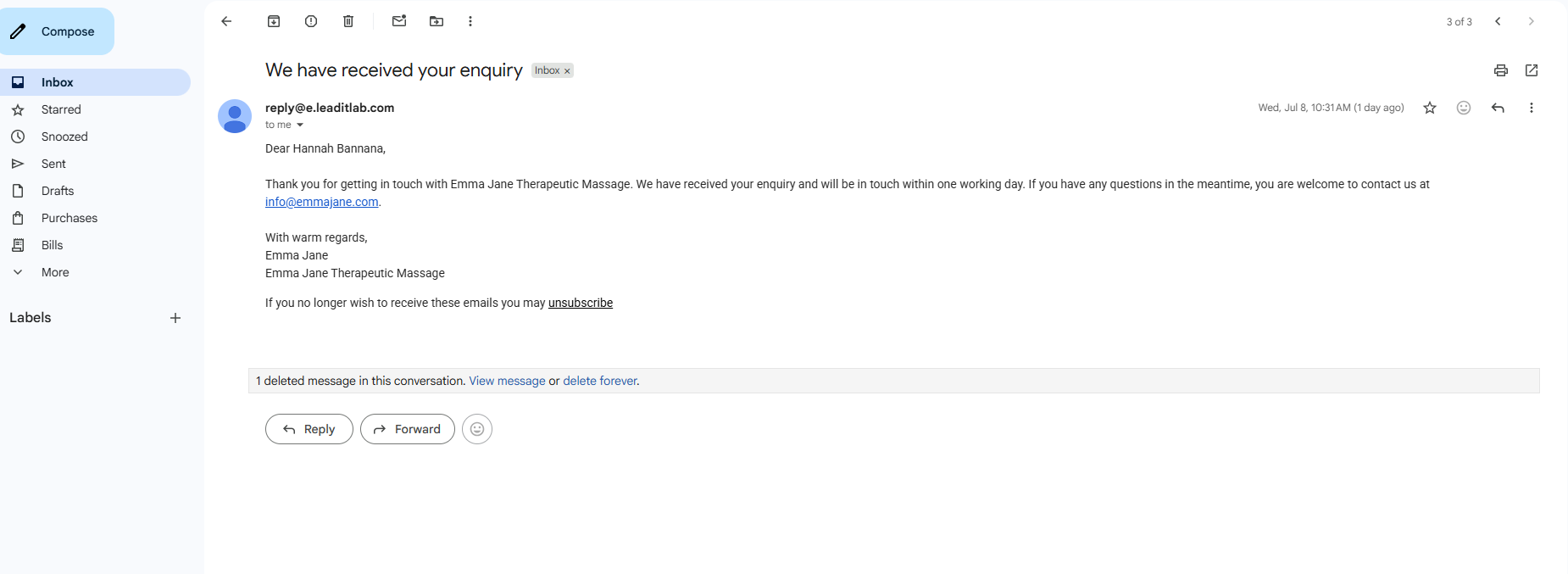
The first reply buys you breathing room
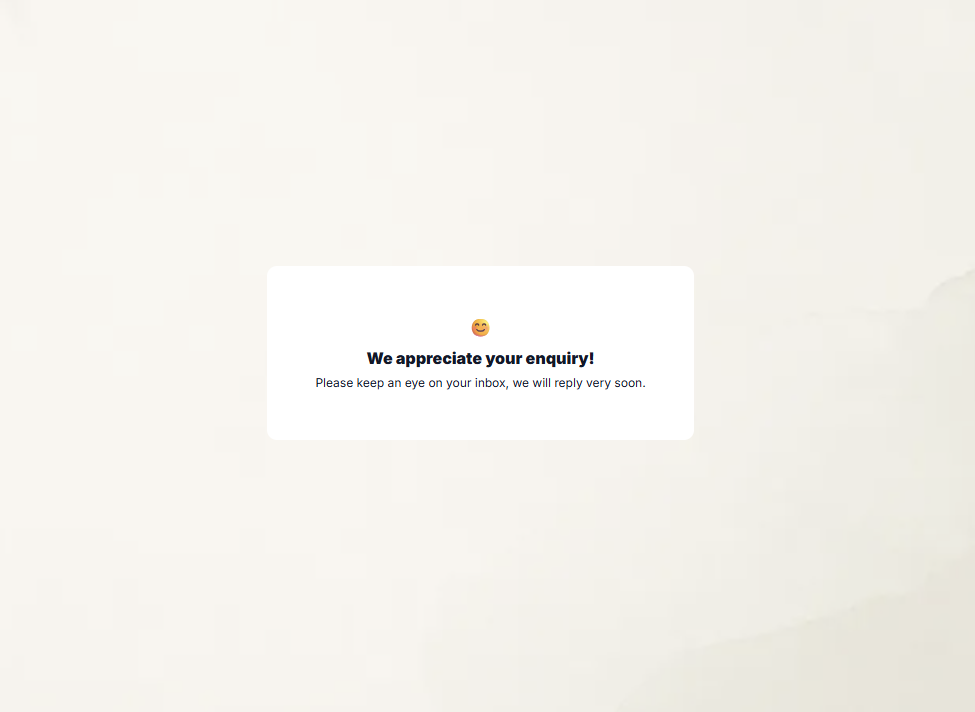
The instant acknowledgement does not need to be long. It just tells the person:
- Your message has landed
- We have seen it
- We will reply soon
- Here is what to expect next
That small message matters because most people are not enquiring with you in isolation. They are usually still deciding. Who feels organised? Who replies? Who makes the next step easiest?
What this first message should do
Confirm the enquiry arrived. Set a clear response expectation. Keep the tone human. Give a simple way to ask anything urgent.
Lesson One
Nothing is left floating
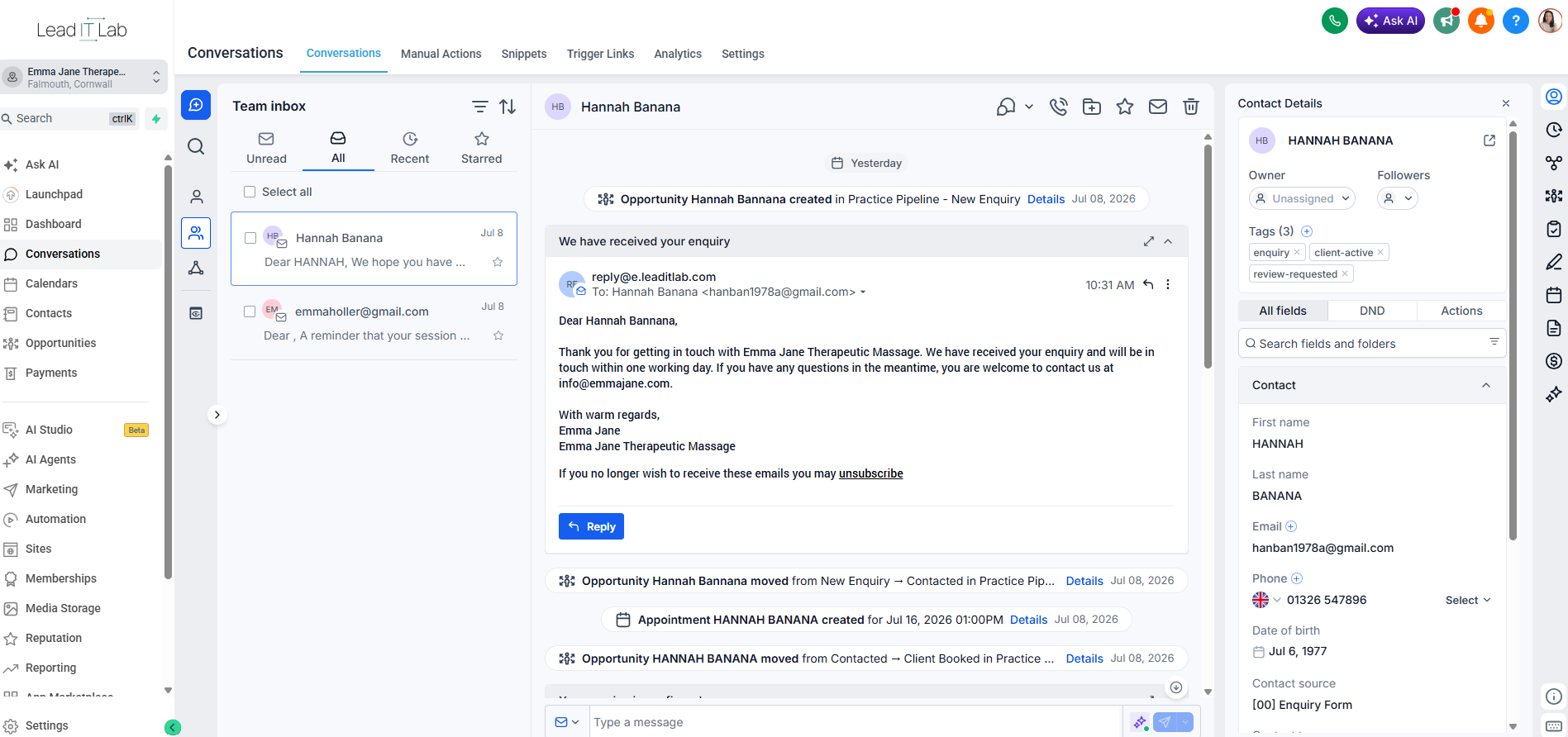
Inside the system, you can see that the acknowledgement was sent. In this example, you can also see that it was opened.
That means the enquiry is no longer floating in an inbox, a DM thread or your head.
There is a record. You know what went out. You know when it went out. You know where Hannah is in the process.
That is the difference between “I think I replied” and “I can see what happened.”
Workbook prompt
Lesson One
The pipeline tells the truth
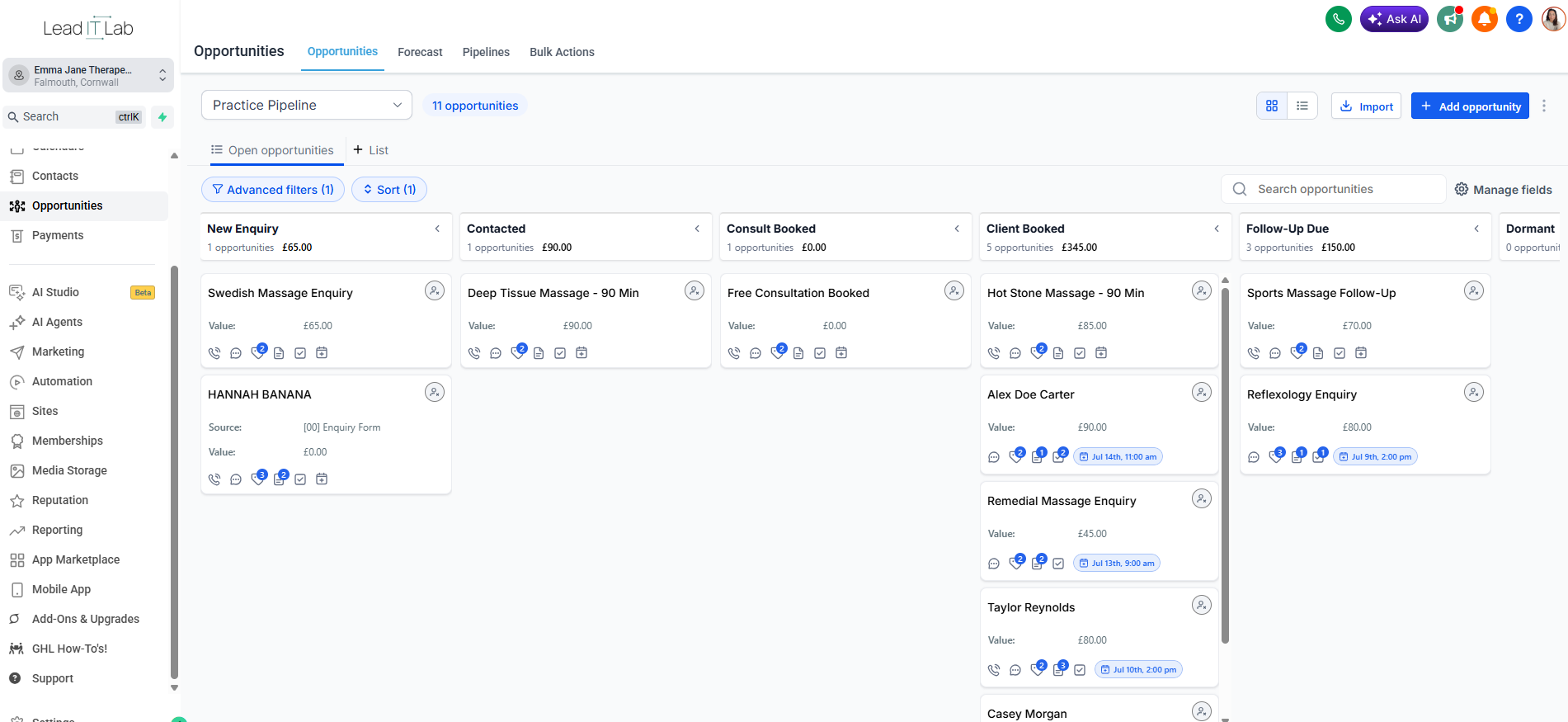
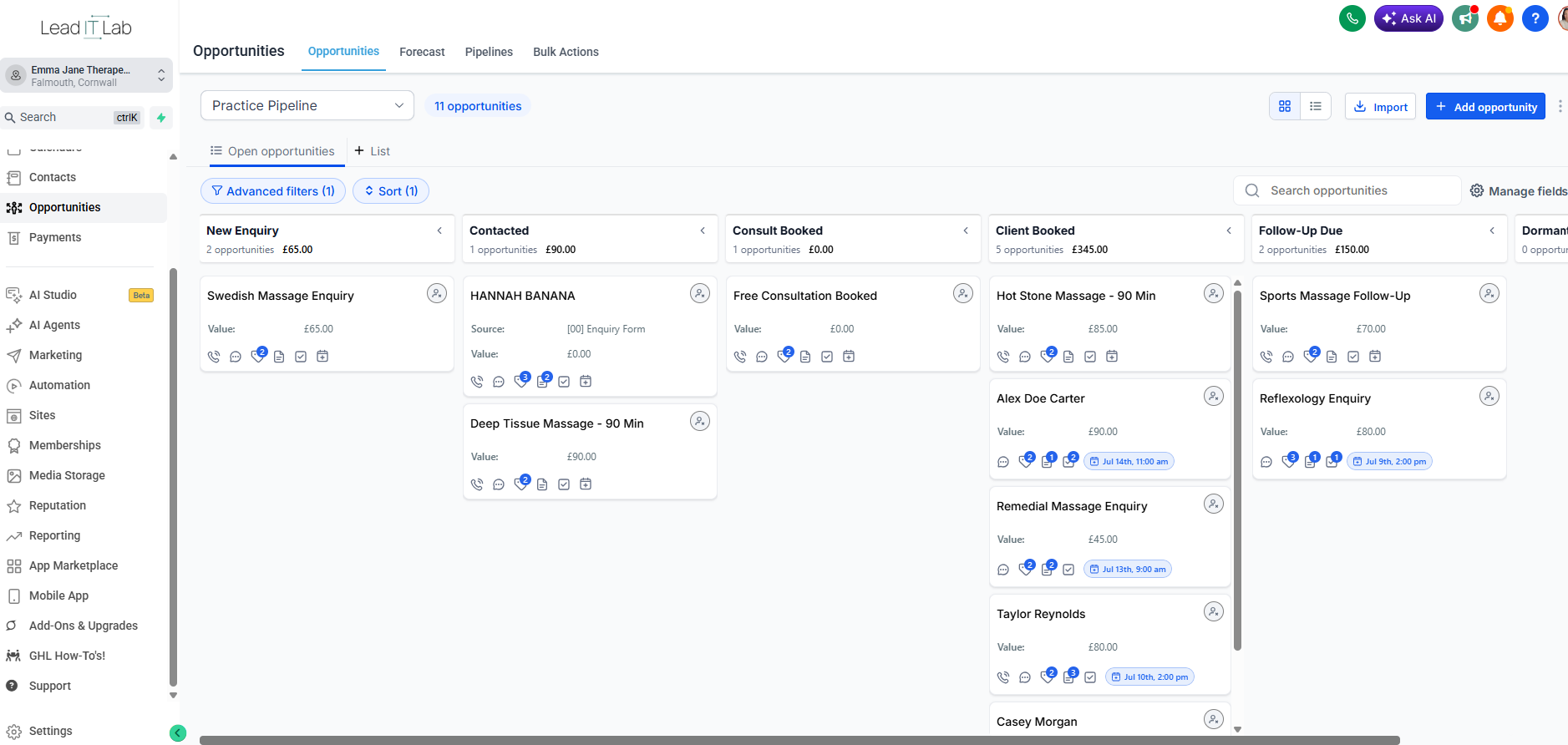
Once Hannah Banana submits the form, she appears in the pipeline as a new enquiry. When she has been contacted, her card moves across.
That is not extra admin for the sake of it. It means you can answer three questions quickly:
- Who is new?
- Who has been contacted?
- Who needs the next step?
The board should tell the truth without you having to hold it all in your head.
A good pipeline is not about being fancy.
It is about knowing where every enquiry is, without searching five different places.
Lesson One, Exercise
Where do your enquiries land?
Five minutes. Be honest. Nobody is marking this.
List every place an enquiry can currently arrive in your practice. Email. WhatsApp. Instagram. Facebook. Phone. Voicemail. Website form. In person. Referral. Anything else.
Then next to each one, write down what actually happens next. Not what should happen. What happens.
If the answer is “I reply when I see it”, write that.
| Where enquiries arrive | What happens next? |
|---|---|
Lesson One, Exercise
Count your doors
Now count your enquiry doors.
Honest question
This is not a judgement. It is the first part of your Setup Score.
Lesson One
Lesson One takeaway
A working setup does not need you to remember where every enquiry came from.
It gives each enquiry:
- One clear route in
- One first response
- One contact record
- One place to track what happens next
If enquiries are arriving in several places, the first fix is not a more complicated system. It is a clearer front door.